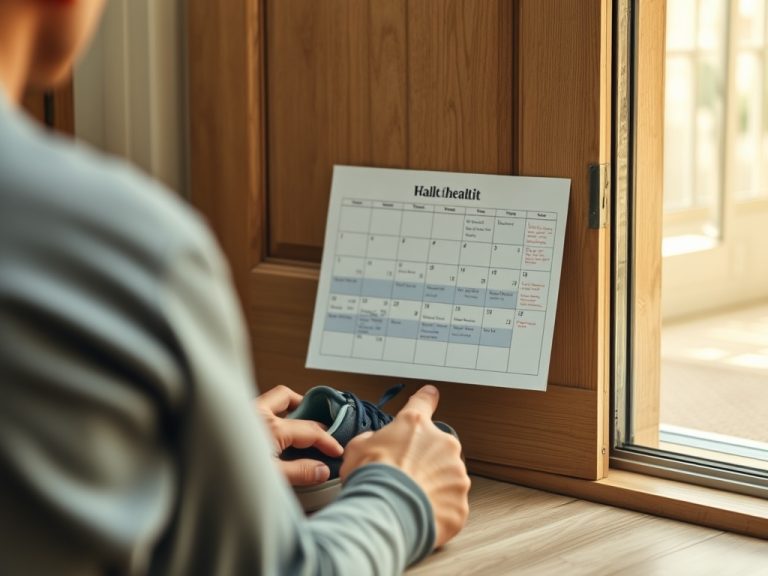
Progressive overload means gradually increasing the training challenge as your body adapts. For beginners, the simplest version is to repeat a small group of exercises, record what you did, and make one modest change only after the current workload feels controlled.
Key Takeaways: Progression can come from more repetitions, better technique, greater range of motion, an extra set, or slightly more resistance. Beginners do not need constant maximum effort. They need a repeatable plan, enough recovery, and a record that shows when the same work has become easier.
Progressive Overload in Plain Terms
Strength improves when the body receives a training demand that is greater than its usual demand and then has enough time and resources to adapt. If the demand never changes, progress eventually slows. If it changes too quickly, fatigue and technique problems can rise faster than fitness.
The American College of Sports Medicine describes consistency and goal-specific programming as central features of effective resistance training. Its 2026 resistance-training position stand overview also makes an important beginner point: moving from no resistance training to some resistance training produces a meaningful gain. You do not need advanced methods to create an effective starting stimulus.
The Beginner Progression Checklist
Use this checklist before increasing an exercise:
- You can complete the planned repetitions with stable form.
- The last repetitions feel challenging but not uncontrolled.
- You recover without unusual joint pain or prolonged fatigue.
- You have repeated the same performance in at least two sessions.
- You can explain exactly what variable you plan to change.
If several items are missing, maintain the current dose. Holding steady is not failure. It is part of training, especially during stressful weeks, poor sleep, travel, illness recovery, or periods when technique is still developing.
Six Variables You Can Progress
Many beginners assume overload only means adding weight. Resistance is one option, but not the only one.
1. Repetitions: Move from eight controlled repetitions to nine or ten.
2. Sets: Add a second or third set after one set is well tolerated.
3. Resistance: Increase the load by the smallest practical amount.
4. Range of motion: Perform the movement through a slightly fuller comfortable range.
5. Tempo: Slow the lowering phase to increase control and time under tension.
6. Exercise difficulty: Progress from wall push-ups to incline push-ups, or from a high chair squat to a lower target.
The right variable depends on the goal. More load may support strength. More repetitions may build local muscular endurance. Better range and control may be the most useful progression when movement quality is the limiting factor.
A Four-Week Example Without Guesswork
Imagine a beginner performing goblet squats with a light dumbbell for two sets of eight repetitions. In week one, the focus is learning stance, breathing, and depth. In week two, the same load and repetitions are repeated with smoother control. In week three, the person completes two sets of ten. In week four, the weight increases slightly and the repetitions return to eight.
This pattern keeps the increase small and observable. It also avoids changing load, sets, repetitions, and exercise variation at once. When only one element changes, you can judge whether the progression was appropriate.
Anyone who is rebuilding basic capacity should first establish a sustainable starting routine. The article on beginning exercise when you feel completely out of shape explains how to set that baseline before progression becomes the main concern.

Use Effort Without Training to Failure
Training to the point where another repetition is impossible is not required for every set. Beginners often improve while stopping with a few repetitions still available. This creates a useful stimulus while preserving technique and reducing unnecessary fatigue.
A simple effort scale can help. Rate a set from 1 to 10, where 10 represents maximal effort. Many beginner working sets can sit around 6 to 8. The exact number is less important than consistency in how you interpret it. If a load rated 8 for two weeks begins to feel like 6 with the same form and repetitions, that is evidence of adaptation.
Federal activity guidance recommends muscle-strengthening work on at least two days each week for adults. The CDC adult activity overview provides examples and shows how strength work fits alongside aerobic activity. A beginner does not need to train every muscle daily to make progress.
Signals That Mean Hold Steady
Do not increase the workload simply because the calendar says it is a new week. Maintain or reduce the dose when technique becomes inconsistent, soreness changes normal movement, sleep is disrupted, motivation collapses after every session, or a joint becomes increasingly irritated.
Performance can also fluctuate for ordinary reasons. A long workday, lower food intake, emotional stress, or poor sleep can reduce readiness. One weaker session does not erase progress. Look for trends over several workouts rather than treating every number as a verdict.
Recovery is part of progressive overload because adaptation occurs between sessions. The guide to how much sleep active adults need explains why training volume and sleep opportunity should be considered together rather than as separate habits.
Errors That Blur the Training Signal
Program hopping is a common problem. If exercises change every week, it becomes difficult to know whether strength improved or you simply became familiar with a new movement. Another error is adding load before the current range of motion is stable. The number may rise while the actual movement becomes shorter or less controlled.
Avoid comparing your progression rate with someone else’s. Training age, body size, exercise selection, equipment, injury history, sleep, and nutrition all affect performance. Social media examples also tend to show selected moments rather than the complete training history.
Do not use soreness as the main decision tool. New exercises can create soreness without providing a superior stimulus. Familiar exercises can produce progress with little soreness. Better indicators include completed work, technique, perceived effort, and recovery.
Keep a Log That Answers Useful Questions
A training log can be simple. Record the exercise, resistance, sets, repetitions, and a short effort note. Add a comment only when something relevant changes, such as reduced range, unusual discomfort, or poor sleep.
After three or four weeks, review the log for patterns. Which exercises are progressing? Which ones repeatedly stall? Are increases followed by missed sessions? Do you perform better after specific recovery conditions? These observations make the plan more individual without turning every workout into an experiment.
Food tracking is not necessary for every beginner, but regular meals can support training quality. A practical structure for building healthy meals without counting every calorie can reduce energy swings while keeping nutrition manageable.
Make the Next Session Slightly More Demanding
Choose one exercise and one progression variable for your next training block. Keep the increase small enough that technique remains recognizable. Repeat the new dose until it feels stable, then decide whether to add repetitions, resistance, range, or another set.
The simplest progressive overload plan is not a rigid weekly demand for more weight. It is a controlled process of applying a challenge, recovering, observing adaptation, and adjusting the next challenge. When that cycle stays repeatable, strength has room to build.