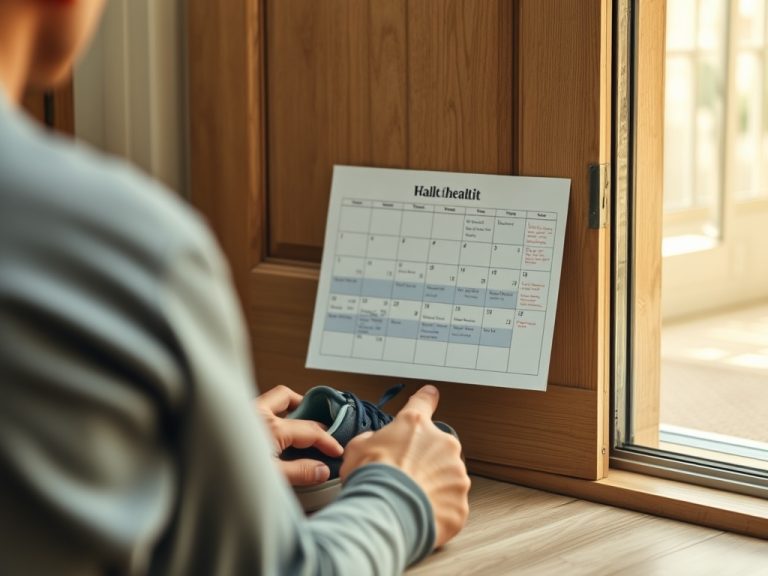
Feeling completely out of shape is not a reason to delay exercise. It is a reason to begin with a smaller dose, lower complexity, and more recovery than a typical fitness plan assumes. The safest useful starting point is an amount of movement you can repeat without losing normal function for the next several days.
Key Takeaways: Start below your maximum, choose repeatable movements, and measure progress by consistency before intensity. A realistic first month may involve short walks, basic strength movements, and planned rest. The goal is not to prove fitness in one session. It is to create enough capacity to complete the next session with confidence.
Begin Below Your Current Ceiling
People often judge a workout by how hard it feels, but difficulty is a poor first benchmark when your recent activity has been low. Your initial program should answer a simpler question: what amount can you recover from comfortably? The CDC guidance for getting started with physical activity emphasizes that some activity is better than none and that activity can be built gradually. That principle matters because an aggressive first week can create soreness, fatigue, or joint irritation that makes the second week less likely.
Use daily life as your baseline. Notice how you feel after climbing stairs, carrying groceries, walking for ten minutes, getting up from the floor, or standing for a longer period. These observations are not a fitness test. They are clues about which movements deserve attention and how much volume your body currently tolerates.
Replace the All-or-Nothing Test
A useful first session should feel almost too easy. That may mean ten minutes of walking, one set of five sit-to-stands, a few wall push-ups, and gentle mobility. If you finish feeling capable of doing more, that is a positive sign. Leaving some effort unused gives you room to learn technique, recognize normal exertion, and distinguish it from warning symptoms.
The broader federal recommendations describe a long-term target of weekly aerobic and muscle-strengthening activity, but they also recognize that inactive people gain benefits by moving more. The current Physical Activity Guidelines for Americans are a destination, not a first-day requirement. Treat them as a direction of travel rather than a pass-or-fail standard.
A Two-Week Re-Entry Plan
For the first fourteen days, prioritize frequency and tolerance over performance. A simple schedule could look like this:
1. Walk for 8 to 15 minutes on three nonconsecutive days.
2. Complete one short strength session on two days, using four or five basic movements.
3. Leave at least one full rest day after the first strength session.
4. Record energy, soreness, joint comfort, and sleep the next morning.
5. Repeat the same dose before increasing anything.
Choose movements that match your current control. A chair squat can replace a deep bodyweight squat. A wall push-up can replace a floor push-up. A supported hip hinge can teach the pattern used for lifting objects. A low step-up can prepare the legs for stairs. A light carry can build grip and trunk control. None of these exercises needs to look impressive to be effective.
Build Around Five Movement Patterns
A balanced beginner routine does not need dozens of exercises. It can be organized around sitting and standing, pushing, pulling, hinging at the hips, and carrying or bracing. One exercise from each category is enough to create a full-body session. When equipment is limited, resistance bands, a backpack, a stable chair, and household objects can provide appropriate resistance.
This is also the right time to learn the logic behind progressive overload for beginners. Progress does not always mean adding weight. It may mean improving range of motion, using steadier tempo, completing one more repetition, or reducing the amount of support you need.

Set Intensity With Simple Signals
For cardio, use the talk test. During moderate effort, you should generally be able to talk but not sing. The CDC explanation of physical activity intensity provides this practical distinction between moderate and vigorous activity. At the beginning, most sessions should stay at an easy or moderate conversational pace.
For strength work, stop each set while you could still complete two to four controlled repetitions. This margin reduces technique breakdown and keeps soreness manageable. Mild muscle fatigue is expected. Sharp pain, chest pressure, faintness, unusual shortness of breath, or symptoms that do not settle with rest are different and should not be treated as normal workout discomfort.
Progress Without Triggering a Crash
Change only one variable at a time. If you add five minutes to a walk, do not also add hills and a faster pace that week. If you add a second set to strength exercises, keep the same resistance. This makes it easier to identify what your body is responding to.
A practical progression rule is to repeat a session successfully two or three times before increasing it. Successful means you maintained control, recovered normally, and could complete your usual responsibilities afterward. The body adapts through repeated exposure, not occasional punishment.
Food choices can influence energy and recovery, but a new exerciser does not need an elaborate nutrition system. A steady pattern based on healthy meals without counting every calorie can support training while keeping attention on habits rather than constant calculations.
Mistakes That Make the First Month Harder
The most common problem is trying to compensate for lost time. Doubling the planned workout, training through significant soreness, and repeating the same hard movement daily can create setbacks. Another mistake is choosing exercises based on social media popularity rather than current ability. Complex movements add learning demands when basic patterns would provide a clearer benefit.
Avoid using sweat, soreness, or exhaustion as proof of effectiveness. These are responses, not quality scores. A short session that you repeat for six weeks is more valuable than an extreme session followed by ten inactive days. Also avoid changing the program every time motivation changes. Repetition helps technique improve and makes progress visible.
Know When Extra Support Is Sensible
Professional guidance is worth considering if you have a known heart, lung, metabolic, neurological, or significant joint condition; are returning after surgery or a major injury; are pregnant or postpartum; or experience concerning symptoms during activity. A clinician can help clarify restrictions. A qualified exercise professional can then adapt movements and progression within those boundaries.
Support can also be practical rather than medical. Scheduling sessions with a friend, joining a beginner class, or following a simple written plan may reduce decision fatigue. The most useful system is one that makes action easier on low-motivation days. The principles in building a dependable health habit can help turn planned workouts into a routine that requires less negotiation.
Make Consistency Your First Fitness Marker
During the first month, track completed sessions, walking time, movement quality, and recovery. Do not expect the scale, mirror, or performance numbers to change in a perfectly straight line. Your first meaningful milestone may be finishing three weekly sessions without excessive soreness, walking farther at the same effort, or standing from a chair with greater control.
Choose the smallest plan you can complete this week, repeat it, and review how you recovered. When the same routine feels easier for several sessions, increase one element modestly. That is how being out of shape becomes a temporary starting condition rather than a permanent identity.